
Article
The Counterfeit PPE Problem Saudi Procurement Teams Can't Afford to Ignore in 2026
Non-compliant and counterfeit safety wear is turning up in supply chains worldwide. Here's how procurement teams are auditing suppliers before it becomes their problem.
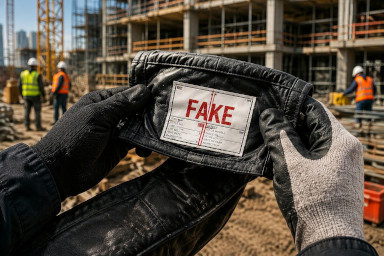
Counterfeit and non-compliant personal protective equipment is no longer a fringe problem confined to online marketplaces. Trading standards bodies and industry groups in multiple regions have spent the last two years flagging safety wear — coveralls, gloves, general workwear — carrying forged certification marks or copied labeling from genuine brands. For procurement teams in the Kingdom sourcing at the scale today's projects demand, that risk is now a line item worth auditing, not an assumption to make.
Why This Is a 2026 Problem, Not a Niche One
Large-scale demand creates exactly the conditions counterfeit supply exploits: buyers under time pressure, multiple intermediaries between manufacturer and site, and price competition that rewards whoever can undercut a genuine certified product. A garment that looks identical to a certified original can still fail the one time it matters, because the fabric treatment, stitching, or fastening hardware behind the label was never tested to the standard it claims.
Red Flags Procurement Teams Are Learning to Watch For
- Pricing that's meaningfully below every other quote for the same certification and brand — a common signal of a diverted, expired, or counterfeit batch.
- Missing or inconsistent batch and lot traceability, which makes it impossible to confirm a garment against the manufacturer's actual production records.
- Certification marks without a matching, checkable certificate number from the issuing body.
- Suppliers unwilling to confirm their authorized distributor status with the brand they claim to represent.
How to Audit a Safety Wear Supplier
- Confirm authorized distributor status directly with the brand, not just with the supplier's own claim.
- Request documentation tying a specific shipment to a specific batch and certification record, not a generic product datasheet.
- Where volume allows, spot-check incoming stock against the manufacturer's known labeling and stitching standards.
- Treat unusually fast delivery on hard-to-source sizes or specs as a question to ask, not a win to celebrate.
The Bottom Line
Certified safety wear is only as good as the supply chain that delivered it. As sourcing volumes climb across the Kingdom in 2026, verifying where a garment actually came from is becoming as much a part of procurement due diligence as checking the certification label itself.