
Article
EN 388 Isn't a Checkbox — Why Glove Selection Is Getting More Scrutiny on Saudi Megaprojects in 2026
Cut-resistant gloves are being issued by rating number alone far too often. As hand injuries remain one of the most common site incidents in 2026, procurement teams are learning that EN 388 is a starting point, not the whole answer.
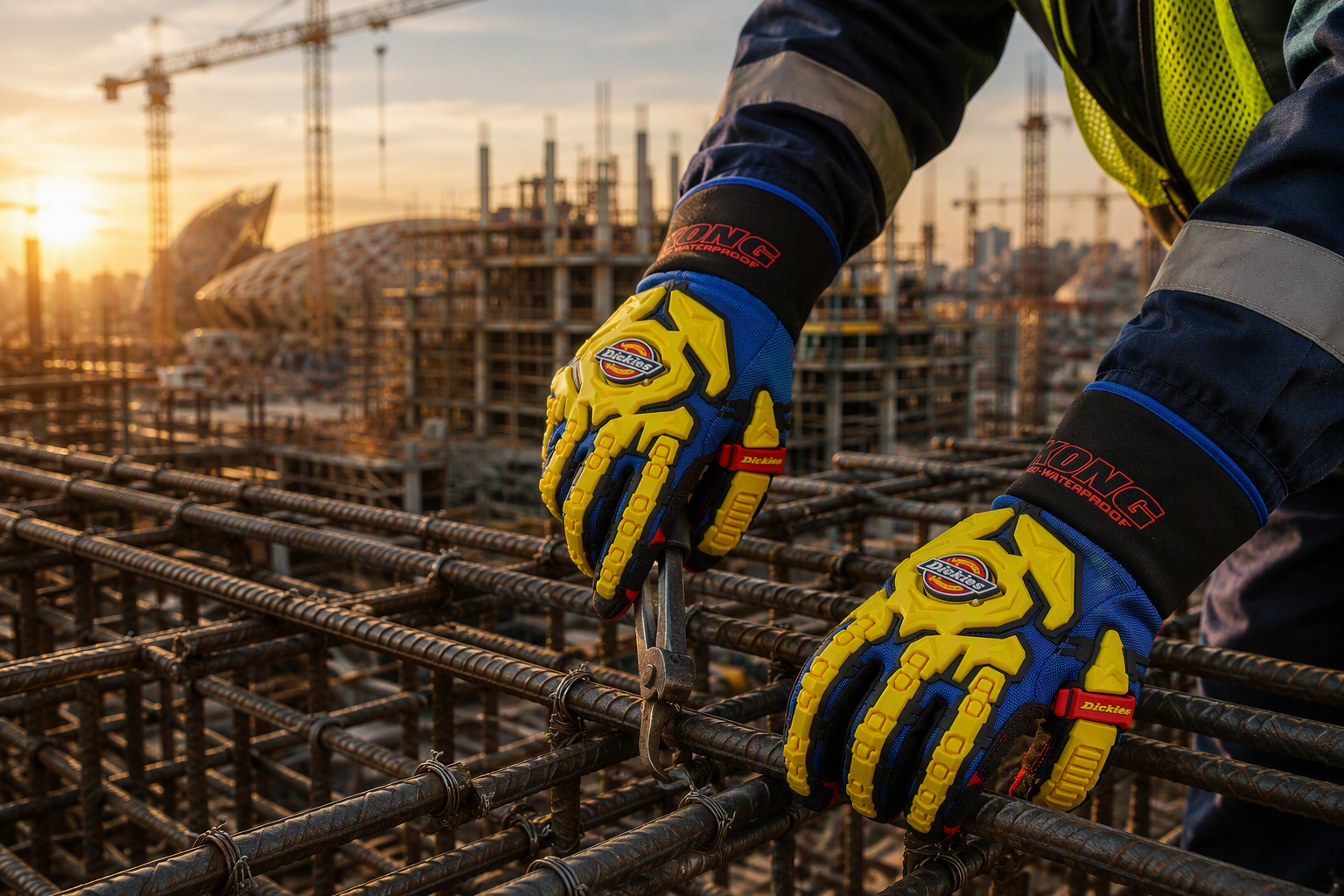
Hand injuries remain one of the most frequently recorded incidents on industrial sites across the Kingdom, and 2026 hasn't changed that pattern — despite cut-resistant gloves being more widely issued than ever. The gap isn't awareness. It's that a lot of procurement and site teams are still treating the EN 388 rating printed on the cuff as a single number to check off, rather than a set of separate scores that need to match the actual task.
Why Hand Injuries Are Still So Common
Lacerations, punctures, and abrasions account for a disproportionate share of recordable incidents on fabrication, steel-handling, and general construction sites. Much of this isn't a failure to wear gloves at all — it's a mismatch between the glove issued and the hazard actually present. A glove rated for abrasion resistance but not cut resistance offers little protection against sheet metal edges; a glove built for cut resistance but with poor grip can contribute to drops and secondary injuries around heavy material handling.
What EN 388 Actually Tells You (and What It Doesn't)
EN 388 is not a single score — it's a set of ratings covering abrasion resistance, blade cut resistance, tear resistance, and puncture resistance, each tested and rated independently. A glove can carry a high overall cut score while performing poorly against puncture, or vice versa. Reading only the headline number, without checking which specific hazard is highest on a given task, is how the wrong glove ends up on the wrong hands.
- Abrasion resistance — relevant for repetitive friction against rough surfaces, not sharp-edge contact.
- Cut resistance (blade) — the rating most buyers focus on, but only one part of the standard.
- Tear resistance — matters where a glove could snag on material or equipment.
- Puncture resistance — a separate hazard from cutting, and often the one overlooked when procurement defaults to "cut-resistant" as a catch-all spec.
Matching Gloves to the Actual Task
Before specifying a glove for a bulk order, procurement teams are increasingly running the same basic check task-by-task:
- What is the dominant hazard on this specific task — cutting, puncture, abrasion, or chemical exposure — and does the glove's EN 388 breakdown actually address it?
- Does dexterity loss from a heavier-rated glove create a secondary risk, such as reduced grip during material handling?
- Is the glove being reissued past its usable life, since cut-resistant fibers degrade with wear and washing the same way FR treatments do?
- Are workers doing tasks outside their assigned glove's rating simply because it's what was on hand that day?
The Bottom Line
A high cut-resistance number on a glove doesn't mean it's the right glove for every job that involves sharp edges. As hand injuries stay stubbornly common across 2026's site activity, the fix isn't a higher-rated glove across the board — it's matching the specific EN 388 profile to the specific task, every time.