
Article
Why 'Welder's Flash' Is Pushing Eye Protection Standards Back Into the Spotlight in 2026
Fabrication and welding work is surging across the Kingdom's megaprojects — and with it, a rise in preventable arc-eye injuries. Here's what proper eye protection selection actually involves.
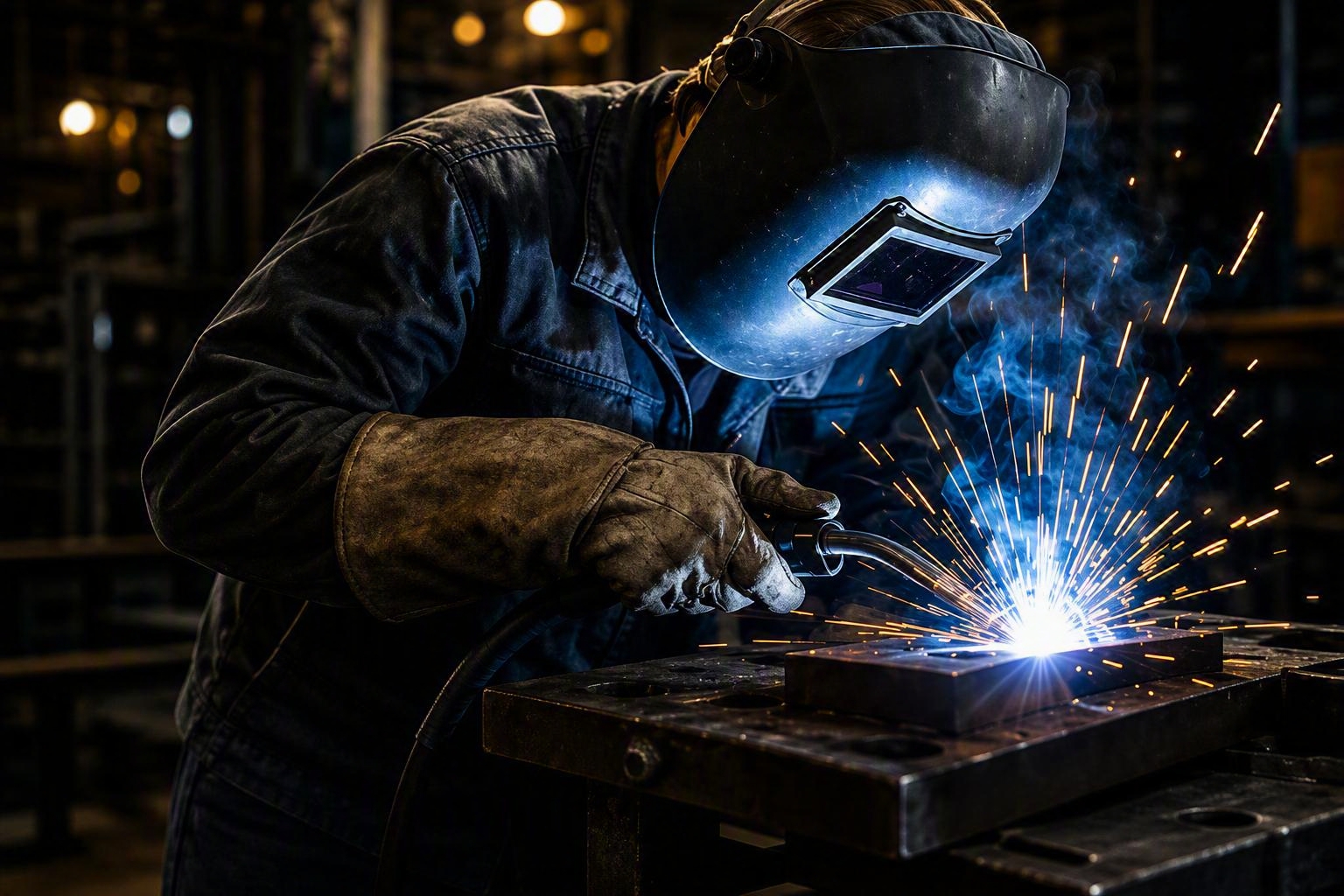
Photokeratitis — better known on site as "arc eye" or "welder's flash" — is a preventable injury that keeps showing up wherever fabrication and welding work scales up quickly. As megaproject construction across the Kingdom drives a surge in structural steel, piping, and fabrication work, safety teams are giving eye protection selection a level of attention it doesn't always get compared to head, hand, or body protection.
Why This Injury Keeps Happening
Arc eye is caused by ultraviolet radiation from the welding arc, and it doesn't require direct exposure to cause damage — a bystander without proper eye protection can be affected by reflected or ambient arc light, not just the welder holding the torch. Because symptoms are often delayed by several hours, workers frequently don't connect the pain to the exposure until well after their shift, making it one of the more under-reported site injuries.
What Proper Eye Protection Actually Requires
- Correct shade-level filters — welding lenses are rated by shade number, matched to the specific welding process and amperage, not a single "one size fits all" tint.
- Certification to EN 169 for welding filters, alongside EN 166 for the base eyewear's impact and optical quality.
- Side and brow protection, not just a front lens — a significant share of preventable exposure comes from light entering around standard safety glasses.
- Separate protection for bystanders working near — but not performing — welding tasks, who are frequently under-protected because the assumption is that only the welder needs shaded eyewear.
Where Standard Safety Glasses Fall Short
General-purpose safety glasses certified to EN 166 protect against mechanical impact and basic UV exposure, but they are not a substitute for welding-rated filters when arc exposure is a genuine risk. Sites that rely on the same eyewear for both general PPE and incidental welding proximity are the ones most likely to see arc-eye cases appear.
The Bottom Line
As fabrication activity scales with the Kingdom's construction pipeline in 2026, arc-eye prevention is becoming a procurement question as much as a training one: are welders and everyone working near them actually equipped with the shade-rated, certified eyewear the task requires — not just general safety glasses assumed to be "good enough"?