
Article
Extreme Heat Is the New Safety Crisis — Why FR Clothing Is Being Redesigned for 2026
Heat stress has become one of the most closely watched occupational safety issues of 2026. Here is what that means for the FR coveralls your crews wear every day.
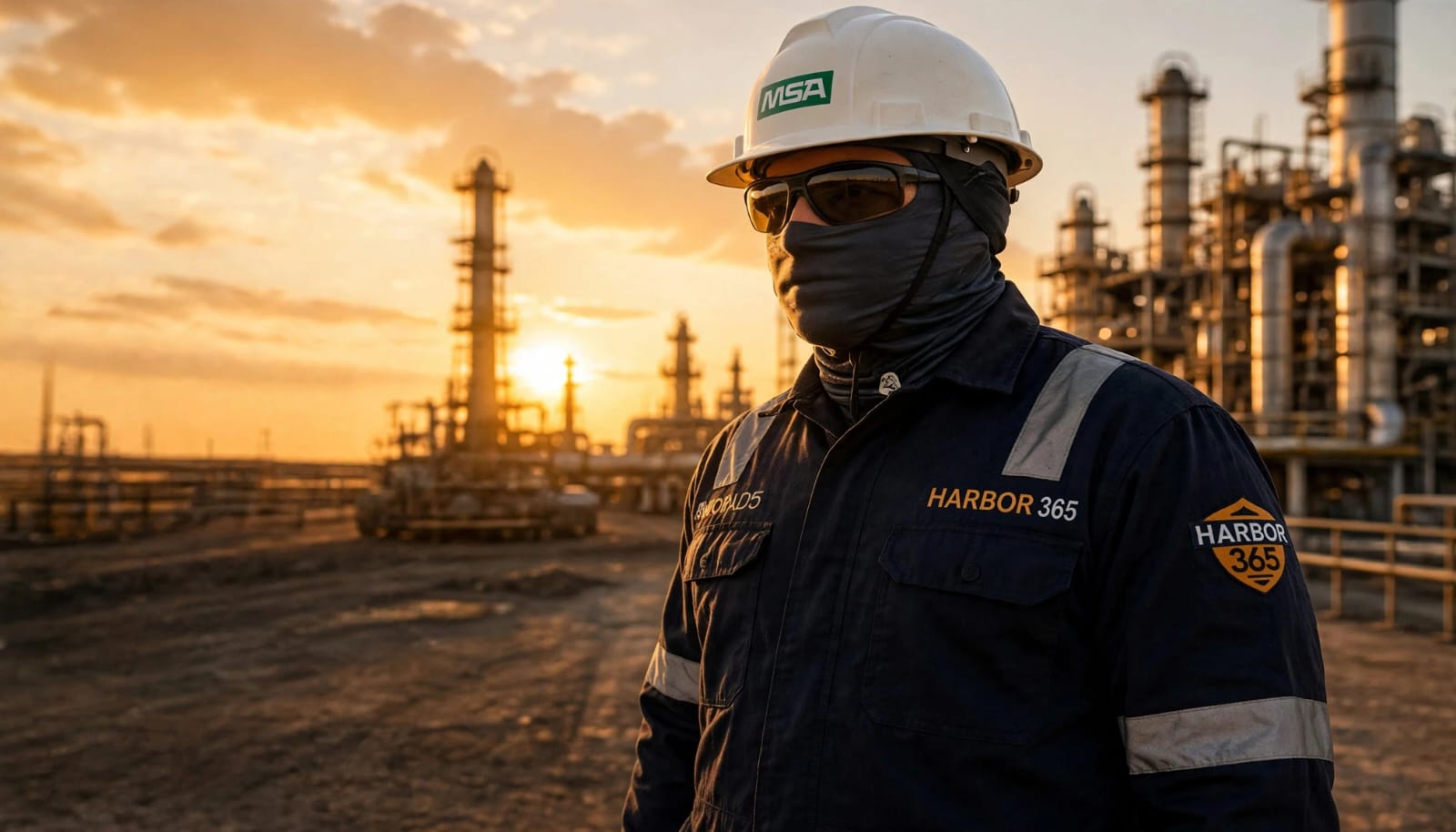
Heat-related illness has moved from a seasonal afterthought to one of the most closely watched occupational safety issues of 2026. Regulators, EPC contractors, and PPE manufacturers are all responding to the same reality: a hotter operating environment is putting more pressure on the protective clothing workers are required to wear all shift long — and nowhere is that tension sharper than with flame-resistant (FR) coveralls.
Why Heat Stress and FR Clothing Are Colliding
FR fabric works by resisting ignition and self-extinguishing when the ignition source is removed — a property that depends on tightly woven, often heavier fabric constructions. That same density is what traps body heat. In Gulf-region summer conditions, where ambient temperatures regularly exceed comfortable working thresholds, workers in standard-weight FR coveralls face a genuine trade-off between flame protection and heat exhaustion risk. Safety teams across the region are now treating heat stress mitigation as part of the same conversation as flame and arc-flash protection, not a separate issue.
What's Changing in FR Garment Design
- Lighter-weight FR blends that maintain NFPA 2112 or EN ISO 11612 certification while cutting fabric weight per square meter.
- Moisture-wicking FR fibers engineered to move sweat away from the skin without compromising the flame-resistant treatment.
- Ventilated construction — mesh-backed panels and underarm venting placed in zones that don't reduce coverage in high-risk areas.
- Layering systems that let workers pair a lighter FR base layer with task-specific outer protection, rather than a single heavy garment worn all day.
What Buyers Should Check Before Placing a Bulk Order
A lighter garment is only useful if it still does its job. When evaluating FR coveralls for 2026 procurement, confirm:
- The ATPV (Arc Thermal Performance Value) or flame-resistance rating is still matched to the actual task risk — not just the season.
- Certification labels (NFPA 2112, EN ISO 11612, IEC 61482 where arc flash applies) are current and garment-specific, not fabric-only claims.
- Wash-cycle limits are documented — FR treatments degrade with laundering, and a "lightweight" garment washed past its rated cycle count is a liability, not a comfort upgrade.
- Sizing accounts for layering, so ventilation gains aren't lost to an oversized fit that traps air against the body incorrectly.
The Bottom Line
Lighter, more breathable FR clothing isn't a comfort trend — it's a direct response to a safety problem procurement teams can no longer treat as secondary. The goal for 2026 is the same as it's always been: protection that workers will actually wear correctly for a full shift, in the conditions they actually face.